
How Long Should Cocktail Hour Be? (And What Most Weddings Get Wrong)
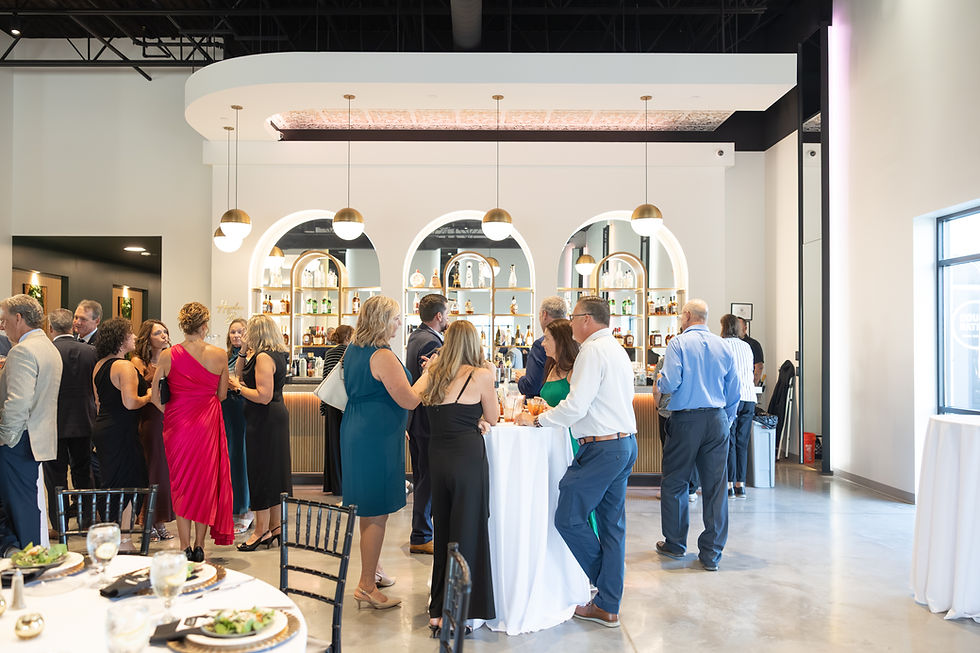
Most people assume cocktail hour is simple. An hour of drinks and appetizers between the ceremony and reception. Set it for 60 minutes and move on.
But in reality, cocktail hour is one of the easiest places for a wedding to feel slightly off, even when everything else is planned perfectly.
Not because the timing is “wrong,” but because it hasn’t been thought through beyond the timeline.
It’s one of those parts of the day you don’t notice when it works and immediately feel when it doesn’t (like we break down in our post on why cocktail hours can feel a little off).
The Standard Answer (And Why It’s Not Always Right)
Traditionally, cocktail hour is scheduled for 60 minutes. And sometimes, that works, but that number isn’t what makes cocktail hour feel right or wrong.
Because cocktail hour isn’t just a block of time, it’s a transition.
It’s when guests:
come out of the ceremony
find each other
get their first drink
settle into the next part of the day
And all of that takes time, differently, depending on your wedding.

What Actually Determines How Long Cocktail Hour Should Be
Instead of starting with a fixed number, cocktail hour timing should be based on what’s happening around it.
Here’s what actually matters:
The Distance Between Spaces
If your ceremony and reception are in different locations or even just different parts of a venue, guests need time to move.
Walking, shuttles, navigating a new space... all of it adds up.
If this isn’t accounted for, cocktail hour can feel rushed before it even begins. It’s something we also see come up when there aren't timeline buffers built in throughout the day.
Guest Count
More guests = more time needed for:
getting drinks
getting food
forming groups
A 60-minute cocktail hour might work for 75 guests, but feel tight for 200.
And when guests feel rushed or disconnected early on, it impacts what they actually take away from the day, which we talk more about in how to host a wedding that actually feels good.
Bar Setup
One of the biggest bottlenecks during cocktail hour is the bar.
If there aren’t enough bartenders or stations, guests spend more time waiting than actually enjoying themselves. And that shift in energy is subtle, but it carries into the rest of the night.
Food Service
Are appetizers passed? Stationed? Limited? If there isn’t enough food, or it’s slow to come out, guests feel it quickly.
Especially if the ceremony ran long or dinner is still far away. This is why we often think about food in terms of timing and flow, not just what’s being served.
What’s Happening Behind the Scenes
While cocktail hour is happening, a lot is going on:
reception space being finalized
vendors resetting
final details being placed
Cocktail hour often needs to “hold” the timeline while that happens. And this is where things can quietly fall apart, or come together, depending on how it’s planned.

What Happens When Cocktail Hour Timing Is Off
When cocktail hour isn’t aligned with what’s actually happening, you feel it, even if you can’t immediately explain why.
Too Short
guests feel rushed
people are still arriving at the bar when they’re asked to move
no time to settle into the moment
Too Long
energy starts to drop
guests get too comfortable
it’s harder to transition into dinner
It’s rarely one big issue; it’s a combination of small ones stacking.
What to Aim for Instead
The goal isn’t to hit a perfect number. It’s to create a cocktail hour that feels like a natural continuation of the day.
That means:
guests have time to get a drink and something to eat
people find each other without feeling rushed
movement feels easy, not forced
the transition into the reception feels smooth
When it’s right, no one notices the timing, it just works.
The Redwood Approach
This is one of the parts of the day we plan most intentionally.
Because cocktail hour isn’t just about filling time, it’s about holding the energy of the day while everything shifts.
We look at:
your layout
your guest count
your service style
your overall timeline
And build cocktail hour around how your day actually functions, not a standard template.

If you’re wondering how long your cocktail hour should be, the answer isn’t always “an hour.”
It’s however long it needs to be for your guests to arrive, settle in, and move naturally into what’s next. Because when that transition feels right, everything that follows does too.

Comments